
PCOS
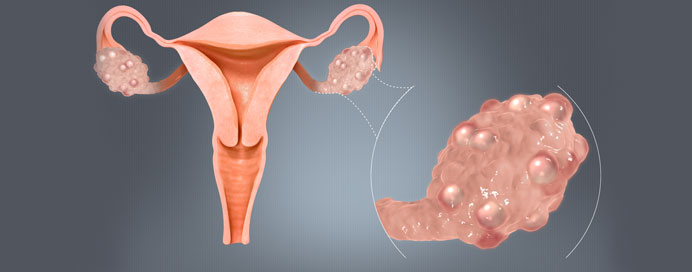
Polycystic Ovarian Syndrome (PCOS)
Polycystic Ovarian Syndrome (PCOS) is a syndrome that affects 10-15% of women. Typically, these women exhibit characteristics such as obesity, menstrual irregularities, infertility, excessive facial hair, and acne. Sonography reveals a distinctive ovarian pattern in affected individuals. Women with PCOS often have elevated levels of androgens (male hormones), attributed to increased Luteinizing Hormone (LH). Infertility in women with PCOS can be effectively addressed using fertility-enhancing drugs like Letrozole, Metformin, and hormone injections such as Human Menopausal Gonadotropins, Follicle Stimulating Hormone, and Recombinant FSH. These medications, also known as ovulation-inducing drugs, facilitate the maturation and release of eggs from the ovaries.
Monitoring follicular response during drug therapy is crucial, achieved through serial ultrasonographies tracking egg maturation and release. Weight reduction significantly improves ovulatory and pregnancy rates in women with PCOS.
For those who do not respond to ovulation-inducing drugs, laparoscopic drilling of polycystic ovaries is an alternative. This procedure involves drilling both ovaries using an energy source, creating 4-6 punctures, and immediately cooling the ovaries with sterile Ringer solution. Laparoscopy offers the added benefit of testing fallopian tubes during the same session, allowing for correction of any associated pathologies like tubal blocks.
Laparoscopic ovarian drilling provides several advantages. Approximately 30-40% of women conceive naturally after the procedure. Follicular response to ovarian stimulation improves, requiring lower doses of hormonal injections. Additionally, the rates of abortion and hyperstimulation with hormonal injections are reduced. Dr. Aditi has a keen interest in dealing with women with PCOS and is an expert in the same.


